EmDash 1.0:不是“没有运维的 WordPress”,而是重划插件与发布权的边界
EmDash 1.0 的官方发布文确认了基于 Astro 的开源 CMS、编辑后台、API、CLI 和内置 MCP,以及去中心化插件注册机制。[[2] EmDash 1.0: the stable CMS with a secure plugin registry | Cloudflare Blog](https://blog.cloudflare.com/emdash-cms-plugin-registry/) 真正值得拆开的,是两组过去常被混在一起的信任:谁有权发布一个插件,以及一个插件被安装后有权接触什么。
一个 CMS 为什么要分开这些角色
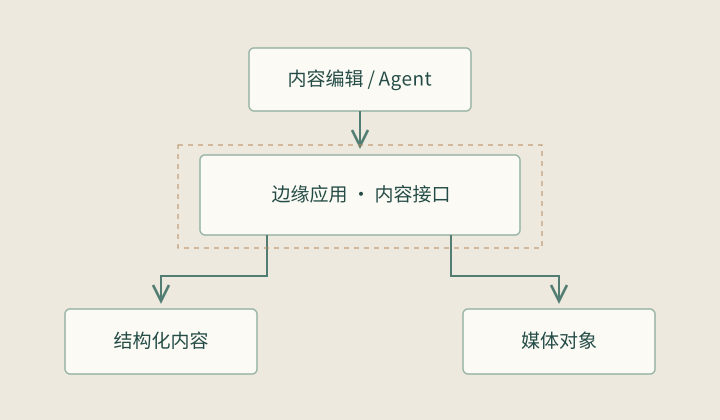
在官方设计里,开发者通过 Astro 构建页面,编辑通过后台维护内容,Agent 通过 API、CLI 或 MCP 工作。[[2] EmDash 1.0: the stable CMS with a secure plugin registry | Cloudflare Blog](https://blog.cloudflare.com/emdash-cms-plugin-registry/) 这意味着“自然语言建站”不是让每一次文案更新都重新生成应用代码。官方同时发布的 EmDash Build alpha 会建立内容模型、通过 MCP 填充内容并写出展示页面,后续编辑可以在 CMS 中继续修改。[[2] EmDash 1.0: the stable CMS with a secure plugin registry | Cloudflare Blog](https://blog.cloudflare.com/emdash-cms-plugin-registry/)
我们的分析:对营销站、出版站或多站点平台,这种分工能把布局开发和日常编辑分开;但它不会自动判断文章真假。结构正确、API 写入成功和内容可靠,是三个不同验收项。将生成稿直接灌入 CMS,仍然可能得到一个技术上正常、事实却错误的网站。
插件沙箱:授权决定能做什么
官方明确说明,沙箱插件默认可以使用自己的私有存储,但不能直接访问站点内容、媒体、用户、秘密、环境、文件系统或网络;额外能力必须由插件声明,再由站点管理员批准。[[2] EmDash 1.0: the stable CMS with a secure plugin registry | Cloudflare Blog](https://blog.cloudflare.com/emdash-cms-plugin-registry/) 例如允许读取媒体,不应同时开放用户信息;允许联系指定服务,不等于开放全部网络。[[2] EmDash 1.0: the stable CMS with a secure plugin registry | Cloudflare Blog](https://blog.cloudflare.com/emdash-cms-plugin-registry/)
实现也需要讲准确:在 Cloudflare 部署上,每个插件通过 Worker Loader 运行成 Dynamic Worker;在 Node.js 上,EmDash 启动单独的 `workerd` 进程,让插件作为隔离服务运行。[[2] EmDash 1.0: the stable CMS with a secure plugin registry | Cloudflare Blog](https://blog.cloudflare.com/emdash-cms-plugin-registry/) 这并非旧稿所说的“所有插件都是 WASM 沙箱容器”。运行时隔离和能力门控是官方给出的机制,不能再为它补上一套未证实的底层技术。
我们的分析:最小权限减少的是被攻陷插件可接触的范围,并不使获得授权的操作天然安全。一个获准读取公开文章并联系搜索服务的插件,依然可能向该服务发送错误内容。安装时要问的不是只有“有没有沙箱”,还要问“它申请的能力是否与用途相符”“升级后是否扩大权限”“撤销后如何处理已传出的数据”。
去中心化注册:目录不等于发布凭证
注册机制采用 AT Protocol。发布者通过可迁移的 Atmosphere 身份发布包与发行记录,记录存放在发布者账户中并签名;EmDash 的目录负责发现和展示,其他服务也可以索引相同记录。[[2] EmDash 1.0: the stable CMS with a secure plugin registry | Cloudflare Blog](https://blog.cloudflare.com/emdash-cms-plugin-registry/) 官方目录可以审核名称、描述、图片和链接并隐藏不合适的展示,但这不等于改写底层发行记录或占有插件身份。[[2] EmDash 1.0: the stable CMS with a secure plugin registry | Cloudflare Blog](https://blog.cloudflare.com/emdash-cms-plugin-registry/)
校验链条也不是“去中心化,所以可信”。原文说明,签名的 Merkle Search Tree 和 inclusion proof 将发行记录连接到发布者签名提交;安装端再核对校验和、包名、版本、申请权限及所需构建来源,确认下载文件与签名记录匹配。[[2] EmDash 1.0: the stable CMS with a secure plugin registry | Cloudflare Blog](https://blog.cloudflare.com/emdash-cms-plugin-registry/)
我们的分析:签名回答“是不是这个发布者的这份包”,权限回答“它能做什么”,两者都不能单独回答“它有没有恶意”。如果发布者本身不可信,签名只能忠实证明恶意包的来源。站点仍需要版本固定、升级审查和恢复预案;目录审核也不能代替代码审计。
性能与部署:别把一种组合写成唯一架构
官方介绍了 Cloudflare Blog 的实际迁移,并说明 KV 对象缓存、Hyperdrive 数据库适配和 Workers Cache 兼容等能力来自这一项目的需求。[[2] EmDash 1.0: the stable CMS with a secure plugin registry | Cloudflare Blog](https://blog.cloudflare.com/emdash-cms-plugin-registry/) 同一原文又明确支持 Node.js 上的插件运行时,因此不能把 EmDash 描述成只能使用 D1 与 R2 的系统。[[2] EmDash 1.0: the stable CMS with a secure plugin registry | Cloudflare Blog](https://blog.cloudflare.com/emdash-cms-plugin-registry/)
这次审计没有得到“任何页面 TTFB 都低于 15ms”的证据,故不保留这一承诺。我们的分析:内容查询、缓存命中、地域和渲染方式都会进入实际响应路径;站点是否够快,应由自身页面的实测决定。Serverless 减少服务器管理工作,也不取消数据库迁移、权限配置、媒体备份和依赖更新。
谁适合尝试|我们的分析
适合评估的场景是希望采用 Astro,同时保留非技术编辑工作流的团队,或需要给多个客户提供受限插件扩展的平台。迁移时先选一个内容集合,逐项核对正文块、链接、媒体、语言版本和旧地址跳转,再让编辑完成一次真实更新与撤回。验收要覆盖“恢复旧内容”,而不只是“新站打开了”。
官方本地创建入口为 `npm create emdash@latest`。[[2] EmDash 1.0: the stable CMS with a secure plugin registry | Cloudflare Blog](https://blog.cloudflare.com/emdash-cms-plugin-registry/) 本文没有执行创建、迁移或上线,也不把 EmDash Build 的 alpha 状态包装成已成熟的通用建站保证。选择 CMS 的依据应是编辑、扩展和恢复能力是否契合自己的工作,而不是“替代某产品”的口号。
Sources
[[2] EmDash 1.0: the stable CMS with a secure plugin registry | Cloudflare Blog](https://blog.cloudflare.com/emdash-cms-plugin-registry/) https://blog.cloudflare.com/emdash-cms-plugin-registry — EmDash 1.0: the stable CMS with a secure plugin registry | Cloudflare Blog
No comments yet